
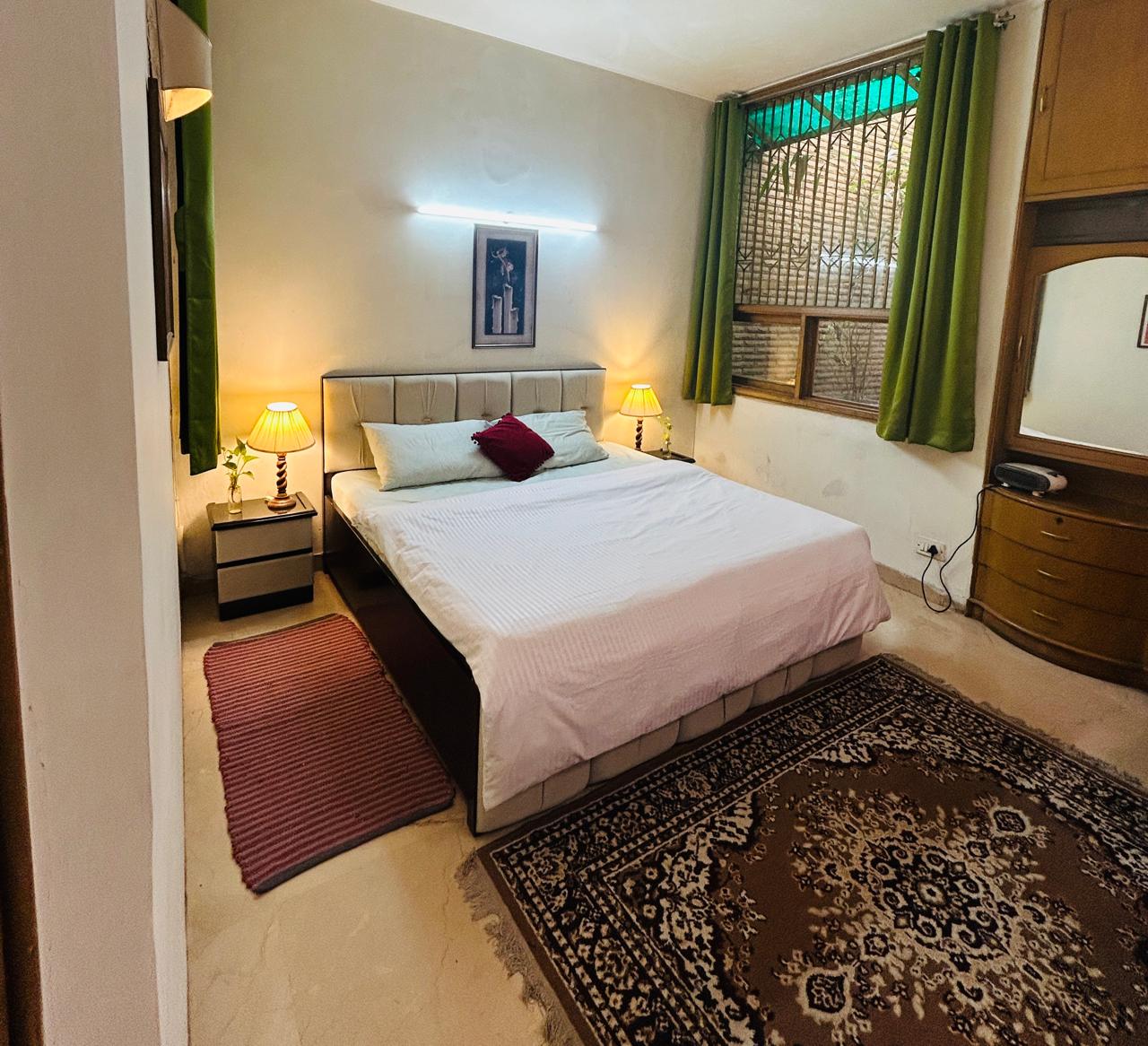
Airbnb in Delhi India for Comfortable, Well-Connected Living
Delhi does not ease people into its rhythm. It moves with intention. Government buildings stand near homes, clinics beside markets, old streets beside glass offices. Your base becomes more important than you expect. That’s why selecting the right Airbnb in Delhi India matters more than most people assume. It’s less about appearance and more about how easily you can exist within the city’s pace.
Your stay becomes part of your routine without you realizing it. It shapes your mornings, your patience, and your energy levels. The right location gives you breathing room. The wrong one slowly drains it.
This distinction becomes obvious after arrival, not before.
Location Determines How the City Behaves Around You
The most important factor when selecting an Airbnb in Delhi India is not the furniture or decoration, or size. It is placement. Delhi’s scale creates consequences for poor positioning. What looks central on a map may still feel disconnected in practice.
Road connectivity matters immediately. Entry and exit shouldn’t feel like a daily obstacle. When taxis, arterial roads, or metro stations are close, moving around becomes straightforward instead of something you have to mentally prepare for. Movement becomes predictable.
Essential services also shape the experience. Access to groceries, medicine, clinics, and nearby shops supports normal routines. Their presence nearby prevents disruption. There should be no need to reorganize the entire day just to get access to basic needs.
Hospitals and clinics add another layer of reassurance. Even if not needed, their proximity contributes to confidence and removes uncertainty.
Equally important is the surrounding environment itself. Some areas remain overly crowded, constantly loud, and difficult to enter or exit. Others feel isolated, disconnected from useful infrastructure. The ideal Airbnb in Delhi India exists between those extremes. Connected but not suffocating. Active but not overwhelming.
Location does not just influence convenience. It shapes mental comfort.
Function Matters More Than Decoration
Many short-term rentals rely on visual appeal to attract attention. While appearance creates first impressions, it does not sustain long stays. Usability does.
Reliable WiFi becomes essential immediately. Work continues during travel. Meetings occur remotely. Files must be uploaded without delay. Guests depend on stable connectivity, not occasionally, but constantly. Weak internet disrupts routine and introduces unnecessary stress.
Natural light brings structure to your routine without effort. It keeps the space from feeling heavy during the day and helps your sleep cycle stay consistent. Artificial lighting alone rarely produces the same balance.
Furniture arrangement contributes to usability. Guests need places to sit comfortably, work briefly, or read without discomfort. A defined seating area makes the space functional beyond sleeping hours.
Parking availability also plays a practical role. In a city where parking can become a daily negotiation, dedicated parking removes uncertainty. Guests arrive and leave without complication.
Cleanliness must remain consistent. Not occasional, not partial. Consistent. Clean environments allow focus to remain on priorities rather than surroundings.
Decoration may attract attention initially. Function determines whether the stay remains comfortable.
Routine Stability Changes the Entire Experience
Travel disrupts structure. Sleep timing shifts. Meals become irregular. Work patterns fragment. A well-managed Airbnb in Delhi India reduces that disruption instead of amplifying it.
Breakfast availability introduces order to mornings. Guests do not need to immediately search for food in unfamiliar surroundings. They begin the day with clarity. This matters especially for professionals with scheduled meetings or families managing appointments.
Predictability makes daily life lighter. Constant small decisions drain attention, and removing even a handful of them helps preserve mental clarity.
Internet reliability reinforces routine further. Calls proceed without interruption. Communication remains stable. Work continues without technical obstacles.
Accommodation should support routine quietly. Guests should not need to compensate for its limitations.
Separation Between External Activity and Internal Rest
Delhi rarely slows down. Even quieter neighborhoods carry underlying motion. Traffic, schedules, and constant interaction create ongoing stimulation. Returning to an Airbnb in Delhi India should create contrast.
The environment inside the accommodation must allow mental disengagement from external demands. Quiet interiors help guests decompress. Natural light during the day and calm lighting at night signal transition.
Defined spaces within the accommodation help as well. A place to sit, to pause, to exist without immediate purpose. These small details support recovery.
Without this separation, fatigue accumulates quickly. With it, guests maintain energy across multiple days.
Rest requires the right environment. It does not happen automatically.
Access to Open Areas Provides Necessary Relief
Urban density affects people gradually. Continuous exposure to enclosed environments and traffic creates subtle mental pressure. Access to open space counterbalances that effect.
An Airbnb in Delhi India located near a park, green belt, or quiet walking area provides optional relief. Guests can step outside without encountering heavy traffic immediately. They can walk briefly, breathe, and reset.
This becomes especially valuable during extended stays. Even short periods in open environments improve clarity and reduce stress.
The presence of open space does not dominate the stay. Its availability simply improves it.
Location determines whether that option exists.
Consistent Food Access Supports Energy and Focus
Food availability affects daily stability. Guests should not need to solve basic nutrition immediately after waking.
An Airbnb in Delhi India, that offers a reliable breakfast creates continuity. Guests begin their day without disruption. Energy levels remain steady. Focus improves.
Consistency matters more than variety. Guests benefit from predictability. It removes unnecessary decision-making early in the day.
Balanced food options also prevent fatigue. Irregular eating affects focus and comfort. Balanced meals support better output.
Accommodation influences physical well-being more than most guests anticipate.
Support Availability Strengthens Confidence
Short-term rentals sometimes overlook support accessibility. When questions or minor issues arise, response speed determines whether the situation remains manageable.
WiFi interruptions, entry clarifications, or logistical questions require timely resolution. Guests should not feel isolated inside the accommodation.
An Airbnb in Delhi India, with responsive support creates reassurance. Assistance exists when needed. Communication remains straightforward.
Security also extends beyond the property itself. Neighborhood stability matters. Active surroundings, nearby services, and visible daily activity contribute to overall safety perception.
Guests do not require constant intervention. They require dependable availability.
Confidence improves the entire experience.
Suitable for Multiple Types of Guests
This type of Airbnb in Delhi India serves a wide range of visitors.
- Professionals get reliable connectivity, structured mornings, and efficient movement in the city.
- Families do better with stability, nearby services, and familiar surroundings.
- Solo travelers benefit from independence without isolation.
- Medical visitors benefit from proximity to healthcare facilities and reduced logistical pressure.
- Long-term guests benefit most significantly. Stability compounds over time. Small conveniences produce meaningful cumulative effects.
Accommodation adapts to purpose. Guests maintain focus on their priorities.
Conclusion
Choosing the right Airbnb in Delhi India is ultimately a practical decision. The city operates with intensity and scale. Accommodation should reduce friction, not contribute to it.
Location determines accessibility. Functional interiors support usability. Reliable internet preserves productivity. Consistent food access maintains routine. Responsive support strengthens confidence. These elements work quietly. Their absence becomes obvious immediately.
The right Airbnb such as Dr. Bali’s Bliss Homestay does not compete with the city’s energy. It balances it. It provides clarity where the city introduces complexity. It allows guests to move easily through Delhi. The right accommodation supports you instead of slowing you down. That distinction defines the entire stay.
FAQs
1. What is most important when booking an Airbnb in Delhi India?
Location matters most. Choose a property with good road access, nearby essentials, and easy connectivity to avoid daily inconvenience.
2. Is reliable WiFi necessary in a Delhi Airbnb?
Yes. Stable WiFi supports work, meetings, and communication. Weak connectivity can disrupt your routine and productivity.
3. How does location impact comfort during a Delhi stay?
A well-placed Airbnb in Delhi India reduces noise, improves accessibility, and lowers daily stress caused by traffic or isolation.
4. Should I look for Airbnb stays near parks in Delhi?
Yes. Nearby open spaces provide relief from city density and help maintain mental balance during longer stays.
5. Why does routine stability matter in an Airbnb?
Consistent internet, predictable meals, and functional interiors reduce decision fatigue and make your stay smoother and more efficient.

All Categories
Recent Posts
24/7 Support Homestay Hauz Khas for a Secure and Comfortable Stay.

Holistic Homestay in New Delhi: Where Wellness and Living Come Together